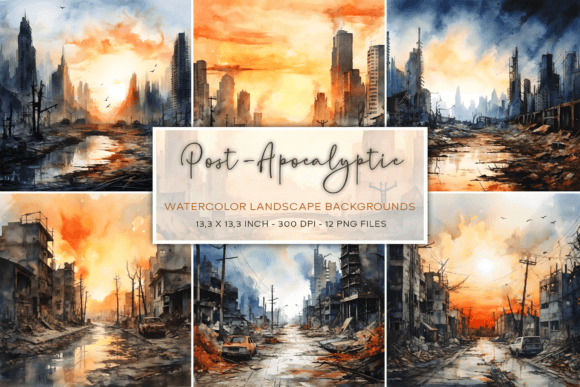
Post-Apocalyptic Watercolor Backgrounds: Moody Design Assets
The digital design landscape is often saturated with clean lines, bright neons, and polished gradients. While these have their place, there is a growing movement in brand identity and editorial design that craves texture, grit, and a story of survival. If you are a designer, content creator, or entrepreneur looking to break away from the sterile corporate look, the Post-Apocalyptic Watercolor Backgrounds collection offers a powerful solution. Receiving 12 high-quality, 4000 x 4000 px digital papers opens up a world of atmospheric depth that standard stock photos simply cannot replicate.
The Visual Language of Ruin and Resilience
When we talk about Post-Apocalyptic Watercolor Backgrounds, we aren't just describing a color palette; we are describing a mood. These digital papers blend the fluid, unpredictable nature of watercolor with the harsh reality of a world transformed. Visually, you can expect to see a collision of organic bleeds and industrial decay. Think of the way water interacts with rust, or how a wash of ink settles into the cracks of concrete.
The appeal of this style lies in its "lived-in" aesthetic. Unlike a flat, vector-based background, these textures have a history. They suggest a narrative of endurance. This is particularly valuable for display font presentations. When you place a bold, heavy typeface over a textured, gritty watercolor wash, the contrast creates immediate visual hierarchy. The organic irregularities of the background make the sharp edges of the typography pop, ensuring your message is not just read, but felt.
Strategic Applications for Modern Creators
While the theme is specific, the utility of these design assets is surprisingly versatile. The key is to look beyond the literal interpretation of "apocalypse" and focus on the mood board. These backgrounds are perfect for projects that require a sense of raw authenticity, mystery, or dramatic intensity.
- Branding and Identity: For brands operating in the survival gear, extreme sports, or even heavy metal music niches, these textures are essential. They can be used as subtle overlays on business cards or as the primary background for a logo design mockup to show clients how the brand holds up in rough environments.
- Publishing and Editorial Design: Book covers for sci-fi, thriller, or dystopian genres rely heavily on atmosphere. These backgrounds provide the perfect stage for title typography. The high resolution (300 DPI) ensures that even when printed at full size for a magazine cover, the texture remains crisp and does not pixelate.
- Digital and Web Design: In web design, full-screen hero images are standard. Using a post-apocalyptic watercolor wash can set a distinct tone for a gaming blog, a film review site, or a portfolio for a concept artist. It breaks the mold of standard sans serif font layouts by adding a layer of organic complexity.
- Physical Products: The files are sized perfectly for high-quality printing. Entrepreneurs selling on platforms like Redbubble or Etsy can use these for packaging design, notebook covers, phone cases, and wrapping paper. The premium font quality of the resolution ensures commercial viability.
Influence on Visual Hierarchy and Audience Engagement
One of the most common mistakes in design is treating the background as merely empty space. In reality, the background dictates the readability and emotional response of the viewer. When using Post-Apocalyptic Watercolor Backgrounds, you must consider the interplay between texture and text.
If you pair a busy, high-contrast background with a script font or a delicate handwritten font, you risk losing legibility. This is where understanding font pairing becomes critical. These backgrounds generally favor bold, clean typefaces. A sturdy serif font or a geometric sans serif font often works best because they provide a solid anchor amidst the chaotic textures of the watercolor. By using these textures, you force the viewer to engage more deeply with the content, as the visual environment feels more immersive and less like a generic template.
Practical Guidance for Implementation
Integrating these assets into your workflow requires a bit of technical know-how to ensure the final product looks professional rather than cluttered. Here is how to get the most out of your creative font and background combinations:
- Opacity is Your Friend: You don't always need the background at 100% opacity. In social media graphics, lowering the opacity to 30-50% can create a subtle "grunge" effect that adds texture without overwhelming the text. This allows for better readability while maintaining the post-apocalyptic vibe.
- Color Grading: While the digital papers come as is, don't be afraid to apply a "Color Overlay" or "Hue/Saturation" adjustment layer in Photoshop. If your brand identity requires a specific color scheme, you can tint these watercolor backgrounds to match your palette, making them fit seamlessly into your modern typography layouts.
- Testing for Fit: Before committing to a background for a large print project, zoom in to 100%. Check how the texture interacts with the kerning and tracking of your type. Ensure the "noise" of the watercolor doesn't create distracting illusions within the negative space of your letters.
Ultimately, Post-Apocalyptic Watercolor Backgrounds are about adding soul to your digital projects. They bridge the gap between digital precision and artistic chaos. Whether you are designing a book cover, a t-shirt, or a website header, these textures provide a commercial font